Monday, August 24, 2015

What Playing Games Can Teach Us About Prayer

While I certainly use my iPhone to check my e-mail and make calls, far and away, what really drains my battery are apps like Cut the Rope, Dark Nebula, and Words with Friends. Like almost everyone else on the planet, I simply love playing games.

But why? What is it about games that draw people in?

According to psychologist Alison Gopnik, it’s because the best games place us right into a sweetspot in the interaction between two poles — structure and creativity.

Sometimes, structure stifles creativity. That’s why Tic-Tac-Toe gets so boring so quickly, because there’s no space for imagination.

But for the most dynamic games, the rules can actually enhance our ability to be creative.

One of my favorite examples comes in a podcast from WNYC’s Radiolab, where co-hosts Jad Abumrad and Robert Krulwich interview chess expert Fred Friedel. Friedel wrote a computer program listing every chess move that has ever been played in any tournament. It’s called “Fritz.”

Continue reading

Tuesday, August 11, 2015

Why I’m an Agnostic Theist

Researchers at The University of Tennessee at Chattanooga have just published a new study about atheists and atheism, and interestingly, the authors argue that non-belief in God is just as variegated as belief in God. At least initially, they have identified six types of non-believers: Intellectual Atheist/Agnostics (IAA), Activist Atheist/Agnostics (AAA), Seeker Agnostics (SA), Antitheists, Non-theists and Ritual Atheist/Agnostics (RAA).

The way these different groups defined themselves show how many different ways there are to think about God, even if people don’t believe in God — the Antitheists actively try to convince people that religion is harmful; the Activists pursue social justice work (such as environmentalism or LGBT rights); and the Intellectuals tend to love to study science, philosophy, sociology and politics.

One group, however, seemed to encapsulate a large segment of the Jewish community: the Ritual Atheist / Agnostics. As Christopher Silver, co-author of the study, notes:

Continue reading.

Monday, February 16, 2015

How Much Do We Value Our Values?

A friend of mine — an ardent environmentalist — just had a baby. She was trying to decide whether she would buy cloth diapers, which would be much friendlier to the earth, or go with disposables. She naturally started with cloth, but within a couple of weeks of washing and reusing and washing and reusing and washing and reusing, she gave in and bought disposables.

“I love the environment,” she said. “Just not enough.”

Very often, when we talk about values, we want to talk about simple right and wrong — we should be good stewards of the earth, or remember that we have a responsibility to help those in need, or ensure that every human being has certain rights. But while some values are about simple right and wrong, in truth, the vast majority are actually about costs and benefits.

Indeed, even one of the greatest scholars in Jewish tradition realized that doing the right thing often has a cost — and doing the wrong thing sometimes has a benefit. In Pirkei Avot, a collection of rabbinic sayings, Rabbi Judah had suggested that we should “calculate the loss of doing a mitzvah against its gain, and the gain of a transgression against its loss.” (Avot 2:1)

Continue reading.


Wednesday, November 19, 2014

Our New Partner: Sinai and Synapses

Welcome to Jvillage Network's newest channel, Sinai and Synapses.


Sinai and Synapses is an organization whose mission is to offer people a worldview that is both scientifically grounded and spiritually uplifting. It aims to provide tools and language for learning and living to the millions of people who see science as their ally as they pursue personal growth and the repair of our world.
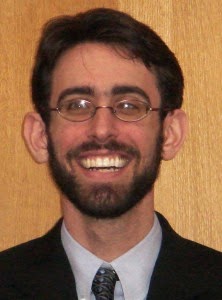
Its founder, Rabbi Geoffrey Mitelman,  is a sought-out teacher, presenter, and scholar-in-residence, and was interviewed by BBC Radio’s World Have Your Say about the religious implications of the Higgs Boson.

He was ordained by the Hebrew Union College-Jewish Institute of Religion, where he received the Cora Kahn Prize from the Cincinnati faculty for the most outstanding sermon delivery and oratory. An alumnus of Princeton University, he received multiple prizes for outstanding scholarship in Biblical and Judaic studies.


With this new partnership, we will bring you posts that bridge the scientific and religious worlds by exploring topics from both perspectives.

We look forward to many interesting articles and we'd love to have your feedback.  We encourage all our members to add this channel to your Jewish Resources navigation.

With that said, we bring you our first post from Sinai and Synapses:

 The Beauty in Science and the Beauty in Judaism


Think about the most inspiring piece of art you have ever looked at. Or the most powerful book you have ever read. Or the most moving play or movie you’ve seen.

Now — why did you find it so beautiful?

There were probably any number of reasons — it may have changed the way you thought about things. It might have emotionally affected you. It almost certainly stuck with you afterwards.

But despite the fact that whatever you chose was personal and subjective, there seem to be certain facets of beauty that cut across all genres, times and places. Educator Howard Gardner argues in his book Truth, Beauty and Goodness Reframed that there are three main elements of beauty: we find something beautiful if it is interesting, if it is memorable, and if it is has a “pull” to it, leading us to continually come back to it.

Continue reading.